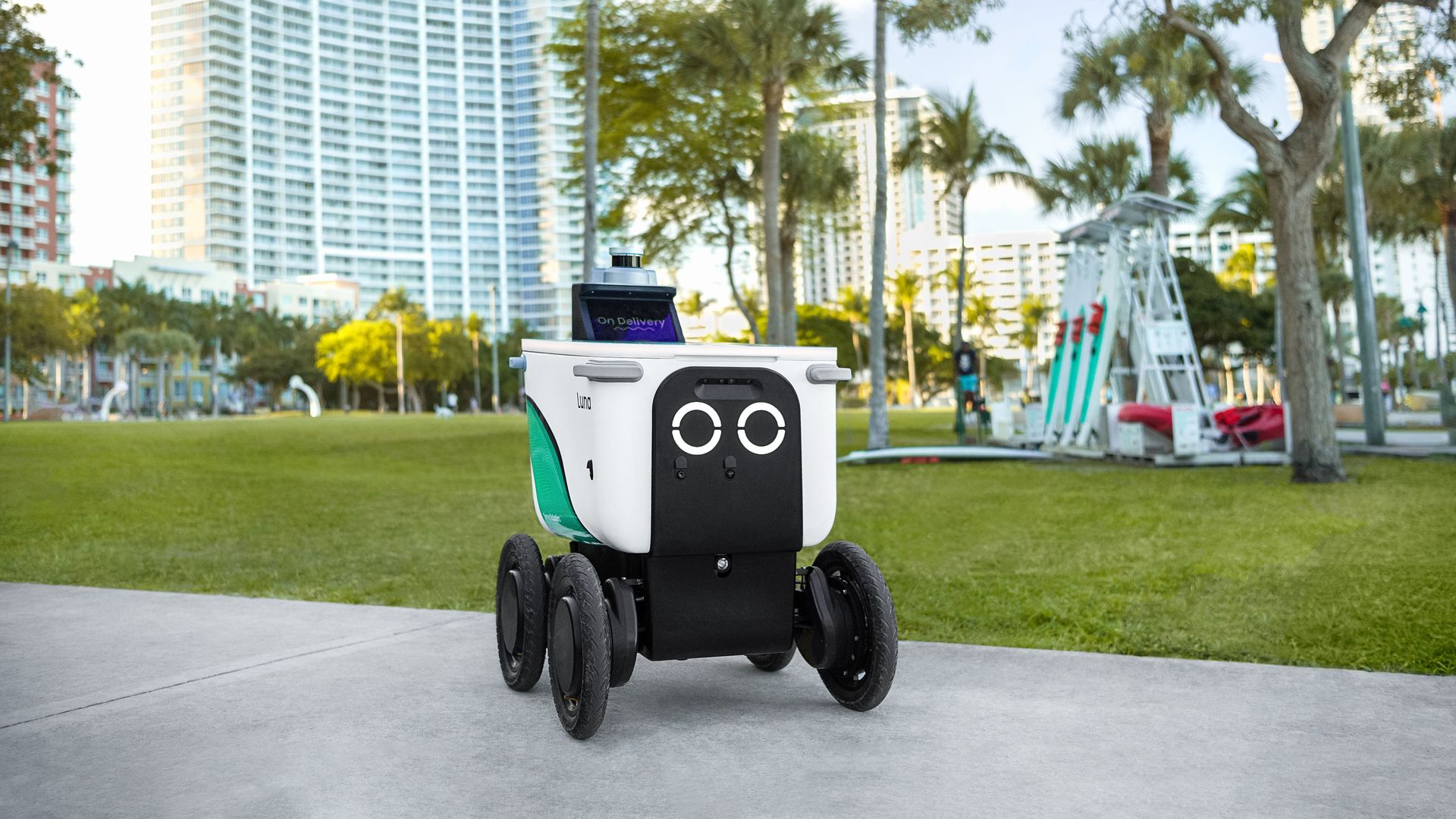
The expansion gives Serve a role as a technology supplier while it continues operating its robot fleets. CEO and co-founder Ai Kashani said the company’s work on robots in human environments helped it develop tools that could serve companies building machines for farms, warehouses and other uncontrolled settings. Serve spun out of Uber’s acquisition of Postmates in 2021 and went public in 2024.
Physical AI Services will offer three products. Serve Link connects robots in the field to AI systems in data centers, potentially giving them access to more powerful models without requiring all the computing hardware to be onboard. A data-curation tool will help customers identify unusual cases in real-world robot data and feed them into training models. The third offering is a catalog of real-world data from Serve’s sidewalk robots, intended to help train foundation models to interpret complex human environments.
Serve is also working with T-Mobile to bring AI computing power closer to robots, an initiative announced alongside the company’s third-quarter earnings. Kashani said reliable connectivity is essential for robots that need to send data or handle exceptions despite unreliable networks.
The new business will sit alongside Serve’s existing delivery operations, which are expanding while shifting from Uber toward partners including DoorDash and Wonder. The company also makes a hospital robot acquired through its purchase of Diligent Robotics. Kashani said those businesses are not going away. He likened the strategy to Amazon opening up technology it first built for its own operations, saying Serve’s experience running its own fleet made the move possible.
Comments (0)
No comments yet. Be the first!