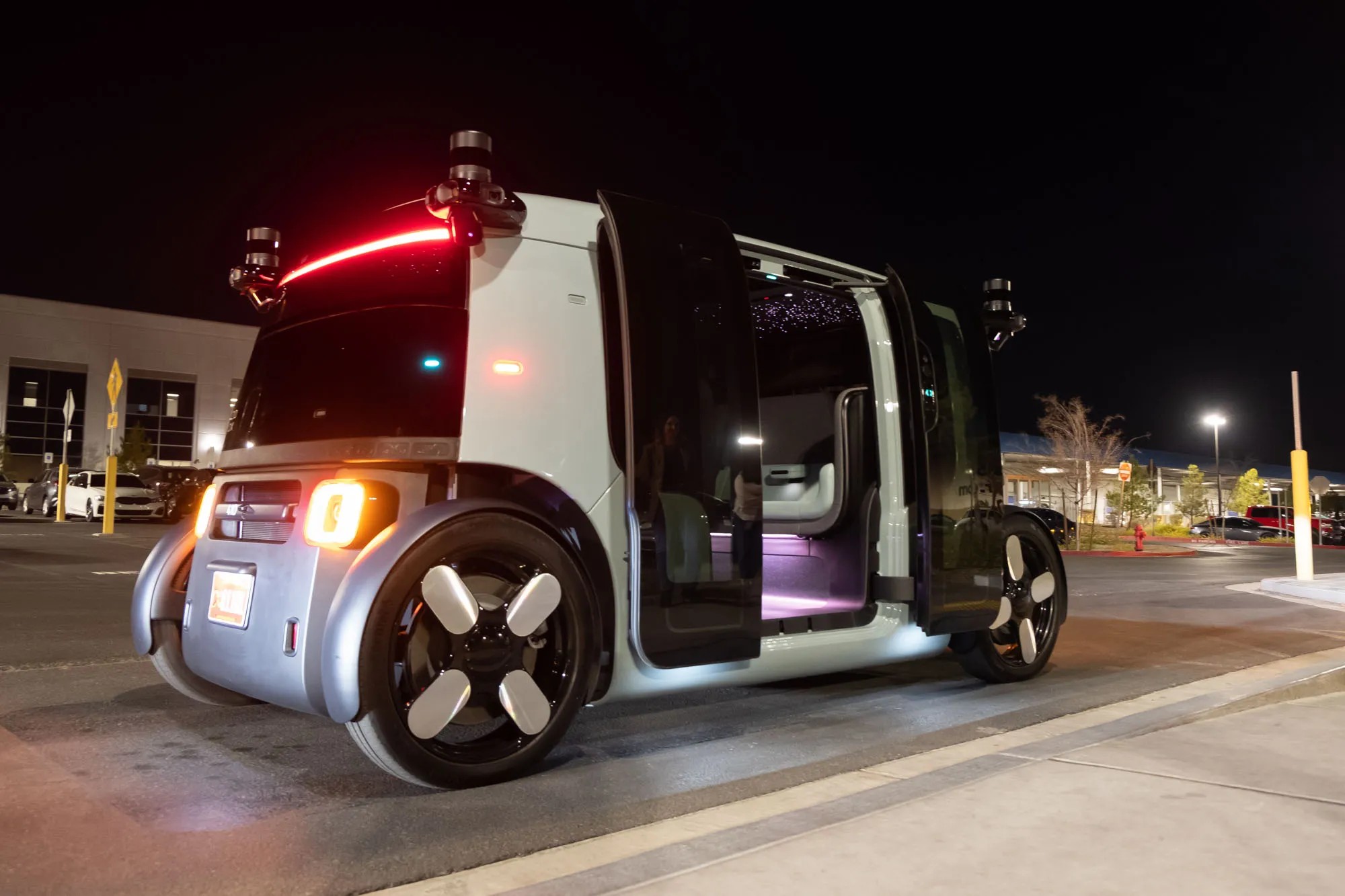
The core engineering remains unchanged: the vehicle retains its bidirectional driving capability, four-wheel steering, and a suite of 40 sensors, including lidar and radar, to navigate speeds up to 75 mph. Inside, the cabin shift focuses on ergonomics and utility. Zoox introduced aloe green seating with additional padding, stone grey flooring, and enlarged cupholders. The design team also added fluting to the charging pads to secure devices and increased the visibility of the primary touchscreens, creating a neutral environment meant to minimize driver distraction.
External modifications include relocated reflectors and a new door-mounted speaker and microphone array for two-way audio. These adjustments serve a dual purpose: facilitating clearer communication between passengers and remote support, and improving interaction with first responders. According to Chris Stoffel, director of robot industrial design, the goal is an elevated, intuitive experience that avoids the sensory clutter found in modern passenger vehicles.
Scaling these changes is the next hurdle. Following the opening of its production facility in Hayward, California, the company targets a capacity of 10,000 vehicles annually, with current output projections reaching 100 units per week. However, the path to paid operations depends on a pending decision from the National Highway Traffic Safety Administration. Zoox currently requires a commercial exemption to operate vehicles that lack federally mandated manual controls. While awaiting regulatory approval, the company continues to run free testing programs in Austin, San Francisco, Las Vegas, and Miami.
Comments (0)
No comments yet. Be the first!