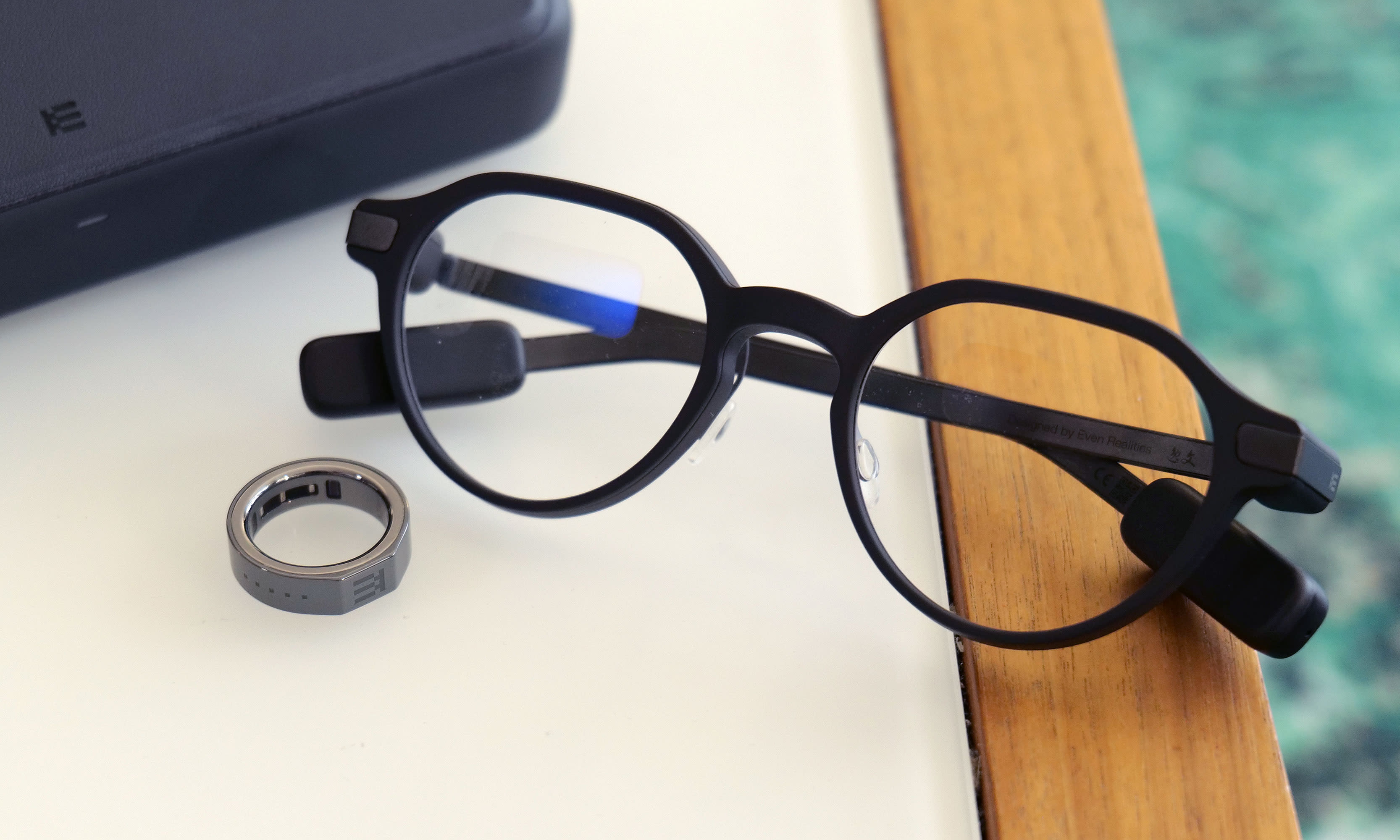
The G2 marks a significant hardware evolution from the company's first-generation model. It features a brighter 1,200-nit display with a 60Hz refresh rate and an expanded viewing area. Constructed from a magnesium alloy frame with titanium temples, the glasses weigh just 35 grams, making them comfortable for extended wear. While the hardware is impressive, the device remains tethered to a smartphone app for connectivity, which has historically been prone to frustrating drop-offs, though recent updates have improved stability.
Functionality centers on professional utility, such as real-time language translation and a teleprompting tool. A standout feature, 'Conversate,' provides AI-driven context bubbles during meetings, offering definitions for complex terms in real time. However, the companion R1 ring—a $249 controller that also tracks health metrics—struggles to justify its cost, as the glasses' own touch-sensitive temples offer similar navigation capabilities without the extra expense. While the G2 offers a compelling alternative to camera-heavy competitors like Meta, its long-term viability hinges on the company expanding its software ecosystem to move the device from a niche gadget to an essential daily tool.
Comments (0)
No comments yet. Be the first!